The 18th BRICS Summit which concluded in New Delhi, India on 13 September 2026 turned out to be a watershed moment in how the non-West and the Global South shall shape the geopolitics of AI in the near future. What the summit witnessed was a rare spectacle of growing camaraderie between AI powers, China, Russia and India putting their weight behind collaborative AI and the notion of growing together in AI.
What does the New Delhi Declaration Say About AI?
Under the summit theme “Building of Resilience, Innovation, Cooperation and Sustainability”, 11 countries, Brazil, Russia, India, China, South Africa, Egypt, Ethiopia, Saudi Arabia, the United Arab Emirates and Indonesia adopted the New Delhi Declaration which stresses on strengthening BRICS AI Collaboration. The Declaration:
- Highlights the need to leverage AI to facilitate efficient management of energy and health infrastructure.
- Underscores the importance of collective and coordinated approaches, mutual learning and practical cooperation in strengthening cyber resilience in the financial sector.
- Urges strengthened cooperation for protecting IPRs across BRICS nations including for data used in training AI systems.
- Share best practices in the area of academic cooperation and talent exchanges including in the domain of AI in education.
- Create smarter, more efficient tourism systems across BRICS nations, using AI.
The statement also appreciates India for its efficient stewardship of the AI Impact Summit in February 2026 and China for holding the World AI Conference in Shanghai to strengthen international AI cooperation for the good of all.
Collaborative Mechanisms Proposed
The summit witnessed the launch of multiple initiatives intended to build institutional foundations for BRICS AI cooperation.
India put forth the Global Research Advanced Infrastructure Network (GRAIN) which aims to provide researchers, universities, and deep-tech startups across the 11 member nations with shared, federated access to advanced high-performance computing (HPC) systems and supercomputers. GRAIN mirrors India’s own AI mission and seeks to counter Western big tech monopolies by building an infrastructure consisted of shared GPUs. GRAIN shall complement the BRICS Science and Research Repository to further advances in areas including drug discovery.
Chinese President Xi Jinping put forth a five-point plan to collectively strengthen BRICS capabilities in AI. Xi’s five points include:
- China-led BRICS open-source community under which member-states shall cooperate on Open-Source AI, joint development of Large Language Models and Applications and shared frameworks.
- A BRICS Special Economic Zone backed by a shared intelligent portal for the purpose of Trade and Investment Facilitation.
- A BRICS Digital Ecosystem Cloud Platform for digital industry integration and facilitate capacity building and technology exchanges.
- Chinese assistance to build smart factories as well as facilitate the formulation of cross-border standards intended to modernize manufacturing across the Global South.
- The establishment of a BRICS Engineering Cultivation Alliance to ensure the mutual recognition of engineering competency standards.
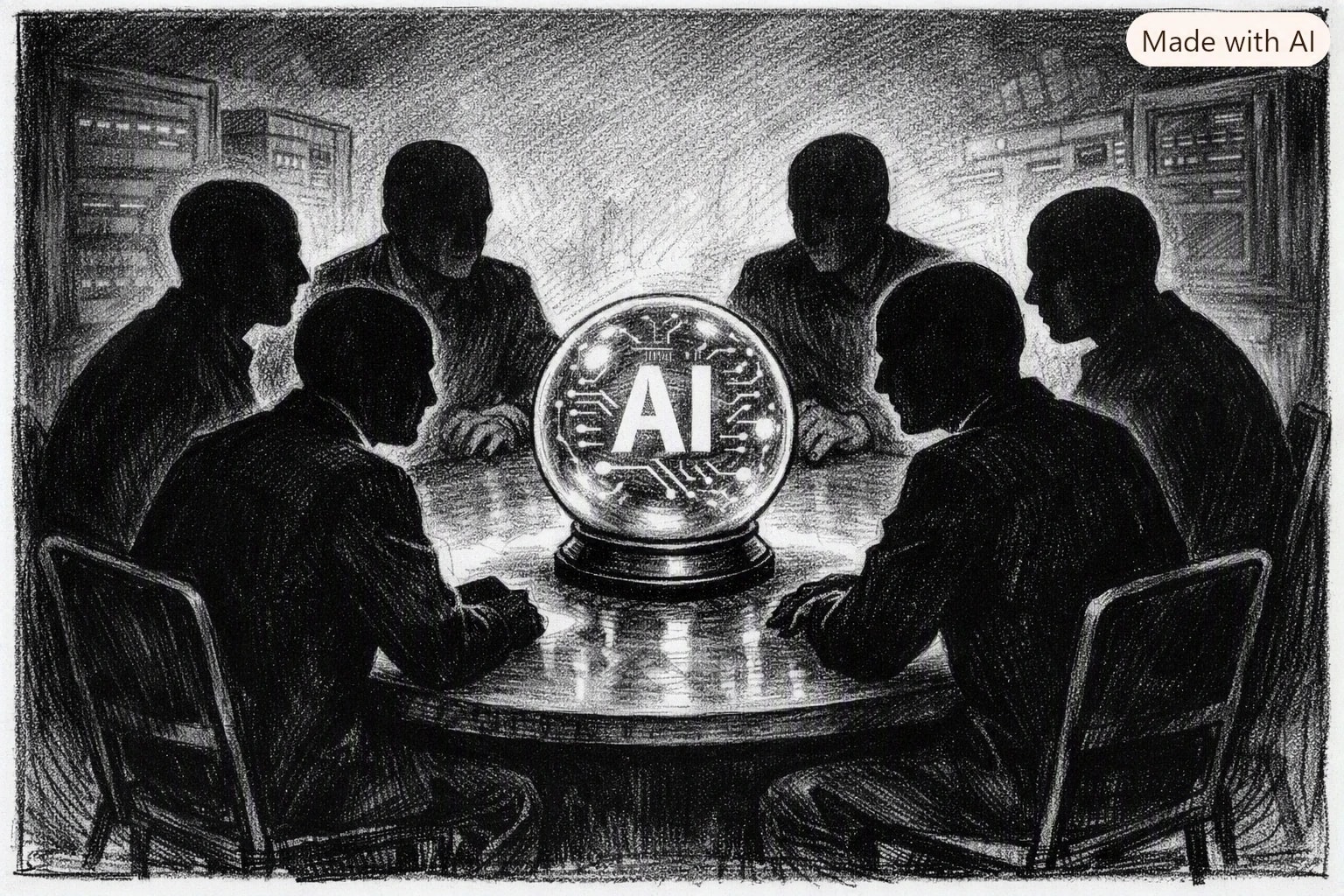
Crystal Gazing and Reading in Between the Lines
BRICS New Delhi saw the major poles of power in the non-Western world chime together on what they stand against, painting a collective picture on the future of the world order. Even amid the fraternal and collaborative mood created by India as chair, geopolitics and power ambitions held dear was indeed the elephant (or the dragon?) in the room. As far as how BRICS as a bloc shall shape the future of global governance, certain key observations ought to be remembered:
Voices From All Over: The BRICS consensus on AI may seem wrinkle-free as a 45-page declaration may suggest. It resonates the strongest in terms of their collective interest in countering Western big tech’s monopoly in AI. However, differences exist in perceptions and expectations from AI, with both optimism and pessimism visible in what some of the bigger nations sought to highlight.
For China, it was a forum to showcase leadership and underline the same as a positive. While India seemed keen on the idea of being the peacemaker, Russia was largely focused on fighting sanctions and streamlining trade in local currencies. Brazil was intent on continuing its work on ensuring respect for Intellectual Property Rights, as was mentioned in the BRICS Rio de Janeiro summit in 2025. It sought to strengthen this idea in the New Delhi Declaration, paragraph 120 of which reads:
“We recognize the importance of collaborating on promoting respect for the intellectual property rights used in the digital environment, including for artificial intelligence training purposes, as well as fair remuneration to right holders, while respecting the needs and priorities of developing countries”.
Meanwhile, South African President Cyril Ramaphosa’s address warned against a loss-of-control scenario with respect to AI. Underlining the need for stronger human control and guardrails, he also proposed for a BRICS level mechanism for scientific evaluation of AI to be set up.
Follow me, China says: China realizes the period till 2028 is a golden window of opportunity to try and establish its legitimacy as a credible and responsible leader in global AI governance. For Beijing, this is expected to ease the path towards becoming an AI superpower in the coming decade. Xi’s five-point plan hence became a key instrument for China to project its leadership, the continuation of a major process it started with the establishment of the World AI Cooperation Organization in July 2026. At BRICS New Delhi, India may have been the power broker, but China indeed stole the show by putting forth a viable blueprint for how the BRICS can collectively advance in AI.
A Sino-Indian AI Dream Team? The past decade of India-China relations has been ruled by overwhelming political mistrust. There was a thaw in New Delhi, and avenues of cooperation particularly in exchange of academia and scientists shall hopefully open up. Both India and China have been steadily moving on their paths to build sovereign AI. Incidentally for India, a major task in this pursuit has been to keep Chinese tech away for security reasons. But a hypothetical coming together of China and India in AI would completely upend the status quo geopolitics around AI. This collaborative behemoth would arguably prove to be a worthy competitor to Washington. However, this still seems unlikely to materialize.